Permanent residence and citizenship in Germany 2026: when and how
When you can get a settlement permit, how the Blue Card shortens the wait, and the 2026 rules for German citizenship, including dual citizenship.
Short answer
21 monthsto permanent residence on a Blue Card with B1 German
In 2026, EU Blue Card holders can get permanent residence (a settlement permit) after 27 months, or 21 months with German at B1. Skilled workers can apply after three years, graduates of German universities after two years of work, and everyone else usually after five years with 60 months of pension contributions. German citizenship is possible after five years of residence with B1 German and a passed naturalisation test, and you may keep your other citizenship. The three-year fast track was abolished on 30 October 2025.
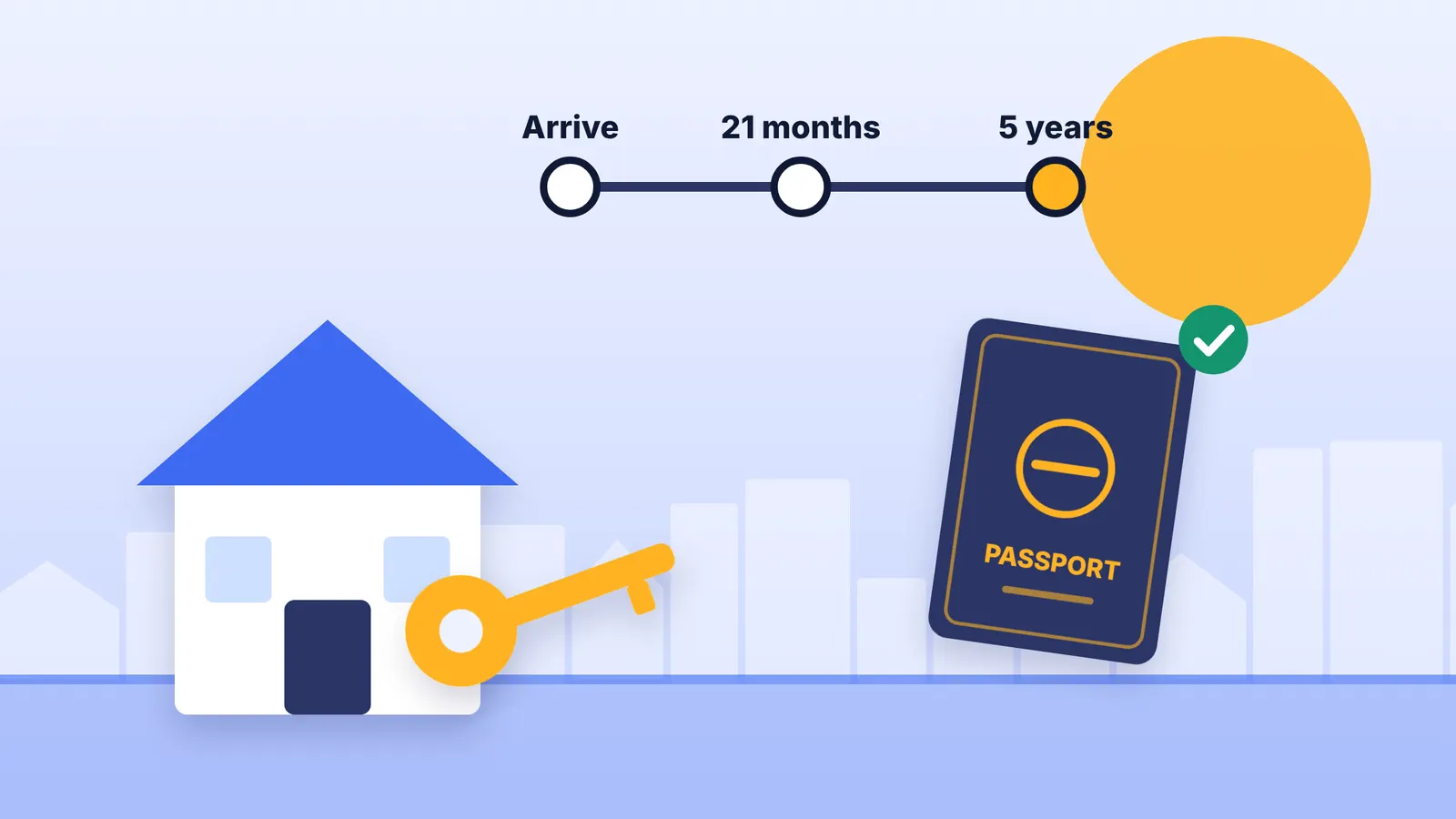
A settlement permit (Niederlassungserlaubnis) lets you live and work in Germany without a time limit and without being tied to a job. Citizenship goes one step further. This guide shows how soon you can get each, depending on how you came.
Permanent residence: how soon?
| Your situation | Earliest settlement permit | Main conditions |
|---|---|---|
| EU Blue Card | 27 months, or 21 months with German at B1 | Pension contributions for those months; German at A1 for the 27-month route |
| Skilled worker permit (§ 18a, § 18b) | 3 years | 36 months of pension contributions, German at B1 |
| Graduate of a German university or vocational training | 2 years after graduating | 24 months of pension contributions, qualified job, German at B1 |
| Self-employed | 3 years | A successful business that supports you |
| Everyone else (general rule) | 5 years | 60 months of pension contributions, German at B1 |
In every case you also need to support yourself without state benefits, have enough living space for your family, and show basic knowledge of the legal and social order (usually through the "Leben in Deutschland" test or an integration course).
If you came on a Blue Card, see Blue Card salary thresholds and work visas compared.
How to apply for permanent residence
- Check your pension record: your statutory pension insurance (Deutsche Rentenversicherung) can send you a statement of contribution months.
- Collect proof of German (a B1 certificate), your employment contract and recent payslips, your rental contract and health insurance.
- Apply at your immigration office (Ausländerbehörde), online if it offers that. Apply early: appointments can take months, and your current permit stays valid while your application is pending if you applied before it expired.
German citizenship in 2026
Since June 2024 you can become a German citizen after five years of residence (previously eight), and Germany accepts dual citizenship, so you usually do not have to give up your current nationality. Check whether your home country allows it.
You need:
- five years of lawful, habitual residence in Germany
- a permanent residence right (for example a settlement permit or a Blue Card)
- German at B1
- a passed naturalisation test (or a German school leaving certificate)
- the ability to support yourself and your family without state benefits
- no criminal convictions, and a commitment to the free democratic constitutional order
The three-year fast track is gone. The 2024 reform briefly allowed citizenship after three years for people with C1 German and exceptional integration. That route was abolished on 30 October 2025.
Costs
| Item | Fee |
|---|---|
| Naturalisation, per adult | €255 |
| Child naturalised with a parent | €51 |
| Naturalisation test | €25 |
Apply at the naturalisation authority (Einbürgerungsbehörde) of your city or district. Waiting times in big cities can be long, so many people apply as soon as they qualify.
Questions people ask
How long does it take to get permanent residence in Germany on a Blue Card?
27 months, or 21 months if you have German at B1, provided you paid into the statutory pension for those months.
Can I keep my citizenship if I become German?
Germany allows dual citizenship since June 2024. Whether you can keep your current citizenship depends on your home country's law.
Is citizenship after three years still possible in Germany?
No. The three-year route was abolished on 30 October 2025. The standard is now five years.
What level of German do I need for German citizenship?
B1, plus a passed naturalisation test.
How much does German citizenship cost?
€255 per adult and €51 for each child naturalised with a parent, plus €25 for the naturalisation test.
Sources
- Make it in Germany: settlement permit: general rule (5 years, 60 months), graduates (2 years, 24 months), self-employed
- BAMF: naturalisation: five-year rule, B1, fees of €255, €51 and €25
- asyl.net: nationality law changes in force on 30 October 2025: end of the three-year route
- Expatrio: Blue Card vs work permit 2026: Blue Card permanent residence after 27 or 21 months
Information only. Not legal, tax or financial advice. Rules change, so check the official source linked above before you act.
Was this guide helpful?