Cost of living in Berlin in 2026
Rent by neighbourhood, groceries, insurance and a realistic monthly budget.
Short answer
€2,100–2,500a month for a single person, rent included
A single person in Berlin should budget about €2,100 to €2,500 a month in 2026, rent included. Rent is the biggest cost: a one-bedroom flat costs roughly €1,100 to €1,800 a month warm in central districts and €700 to €1,000 further out.
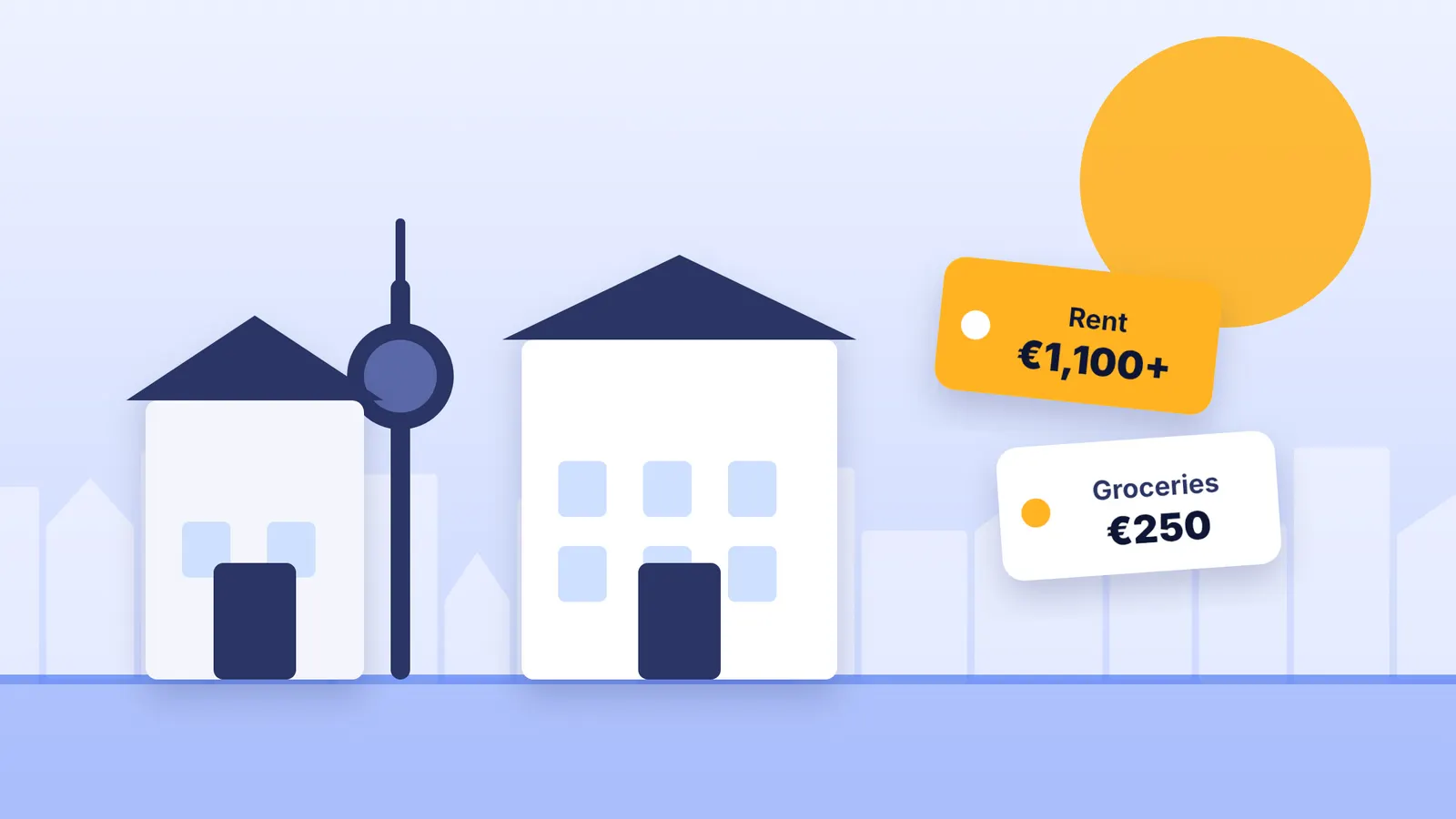
Wondering about the cost of living in Berlin in 2026? When I first stepped off the train at Hauptbahnhof a few years ago, I thought I was ready for the city’s legendary “poor but sexy” life—€400 flatshares in Kreuzberg and late-night Späti beers as the biggest expense.
Fast forward to 2026, and the city hasn’t lost its charm. The parties, the parks, the creative energy—they’re all still here. But the “poor” part? Not so much. If you’re moving to Berlin or just trying to make sense of your first year here, here’s the real deal on the cost of living.
Rent: The Big Berlin Shock
Rent is the number-one money-sucker. I still remember my apartment hunt in Neukölln: 80 people at a viewing, everyone in their “I’m reliable” sweaters, folders thicker than my CV. That 50sqm one-bedroom? Now it’ll set you back around €1,150 warm.
Here’s a snapshot of what to expect in different neighborhoods:
- Mitte & Prenzlauer Berg: €1,400–€1,800 for a one-bedroom. Think “international vibes”—English is everywhere.
- Neukölln & Friedrichshain: Creative hubs, €1,100–€1,400. Trendy but slightly more manageable.
- Wedding & Lichtenberg: Up-and-coming, €850–€1,000. Still possible to find hidden gems.
- Marzahn & Spandau: Outer districts, €700–€850. Cheap rents, but your commute will become your new best friend.
Pro tip: Many apartments don’t come with a kitchen. Yes, really. I dropped €2,400 at IKEA just to boil an egg. Always check if your flat has an Einbauküche (EBK).
Groceries: You Can Control This One
Groceries are more predictable and depend a lot on where you shop:
- Discount supermarkets like Lidl, Aldi, Netto can keep your bill around €250–€300/month.
- If you mix in organic markets and farmers markets, your food bill can easily climb to €400–€450.
Typical prices (2025–2026 range):
- Milk (~€1.20–€1.31/L), eggs (~€3.00–€3.27/dozen).
- Bread, fresh produce, and weekly staples often stay affordable compared with other big European capitals.
You can shop smart and split shopping between discount chains and local markets for better quality without breaking the bank.
Transport: The €63 Deutschlandticket
Riding the Berlin U-Bahn with the €63 Deutschlandticket makes city and regional travel easy for expats in 2026.
One of the biggest quality‑of‑life wins in 2026 is the Deutschlandticket: for €63 per month, you get unlimited travel on all regional and local trains, U‑Bahns, S‑Bahns, trams, and buses across Germany.
That means commuting, weekend trips, and city exploration become much easier to budget—and one predictable recurring cost that replaces a lot of zone‑by‑zone confusion.
Insurance, Bills, and the “Invisible” Costs
Germany’s bureaucracy shows up in line items that can surprise new arrivals:
- Health insurance (public, GKV): 14.6% of gross salary plus your insurer’s extra contribution (2.9% on average in 2026), split with your employer. Freelancers can pay €200–€400/month or more depending on income.
- Broadcasting fee (Rundfunkbeitrag): €18.36 per month per household.
- Internet & mobile: Around €30–€60/month depending on plan and speed.
Once you add these mandatory services, many people find they’re out €400–€500/month before they even factor in fun stuff.
A Typical Monthly Berlin Budget (2026)
| Category | Estimated Cost |
|---|---|
| Rent (warm, 50 sqm) | €1,150–€1,500 |
| Health Insurance (employee share or freelancer) | €200–€350 |
| Groceries | €300–€450 |
| Deutschlandticket | €63 |
| Internet & Mobile | €30–€60 |
| Misc (TV tax, gym, subscriptions) | €60–€120 |
A realistic total for many expats lands around €2,100–€2,500 per month—more if you go out often, less if you’re very frugal.
Small Habits That Cut Costs
Some simple habit changes can add up fast:
- Use tap water instead of bottled (Berlin’s water quality is excellent).
- Pick up discounted meals with “Too Good To Go.”
- Brew coffee at home instead of daily café visits.
Little tweaks like these can save you €50–€100+ per month.
Is Berlin Still Worth It?
Berlin isn’t the ultra‑cheap city it once was, but it still brings enormous value: vibrant culture, green spaces, festivals, arts, and an international expat community that welcomes you. When you’re sitting on Tempelhofer Feld watching the sunset or biking through Tiergarten in spring, you start to see why people accept the higher cost of living.
If you’re already here: what cost surprised you most? Planning your move: what part of the budget is most intimidating? Let’s talk about it.
Save this guide for your planning or share with someone dreaming of Berlin life.
Questions people ask
How much money do you need to live in Berlin in 2026?
A single person should budget about €2,100 to €2,500 a month, rent included.
How much is rent in Berlin in 2026?
A one-bedroom flat costs roughly €1,100 to €1,800 a month warm in central districts and €700 to €1,000 further out.
Sources
- Settle in Berlin – cost breakdown including rent and groceries.
- Xolo blog – transport and health insurance cost estimates.
- Kummuni – utilities, internet, and monthly budget scenarios.
- Expat Arrivals – average apartment rent and grocery prices.
- Livingcost.net – food and transport price listings.
- Familienportal Berlin – Deutschlandticket pricing from 2026.
Information only. Not legal, tax or financial advice. Rules change, so check the official source linked above before you act.
Was this guide helpful?