
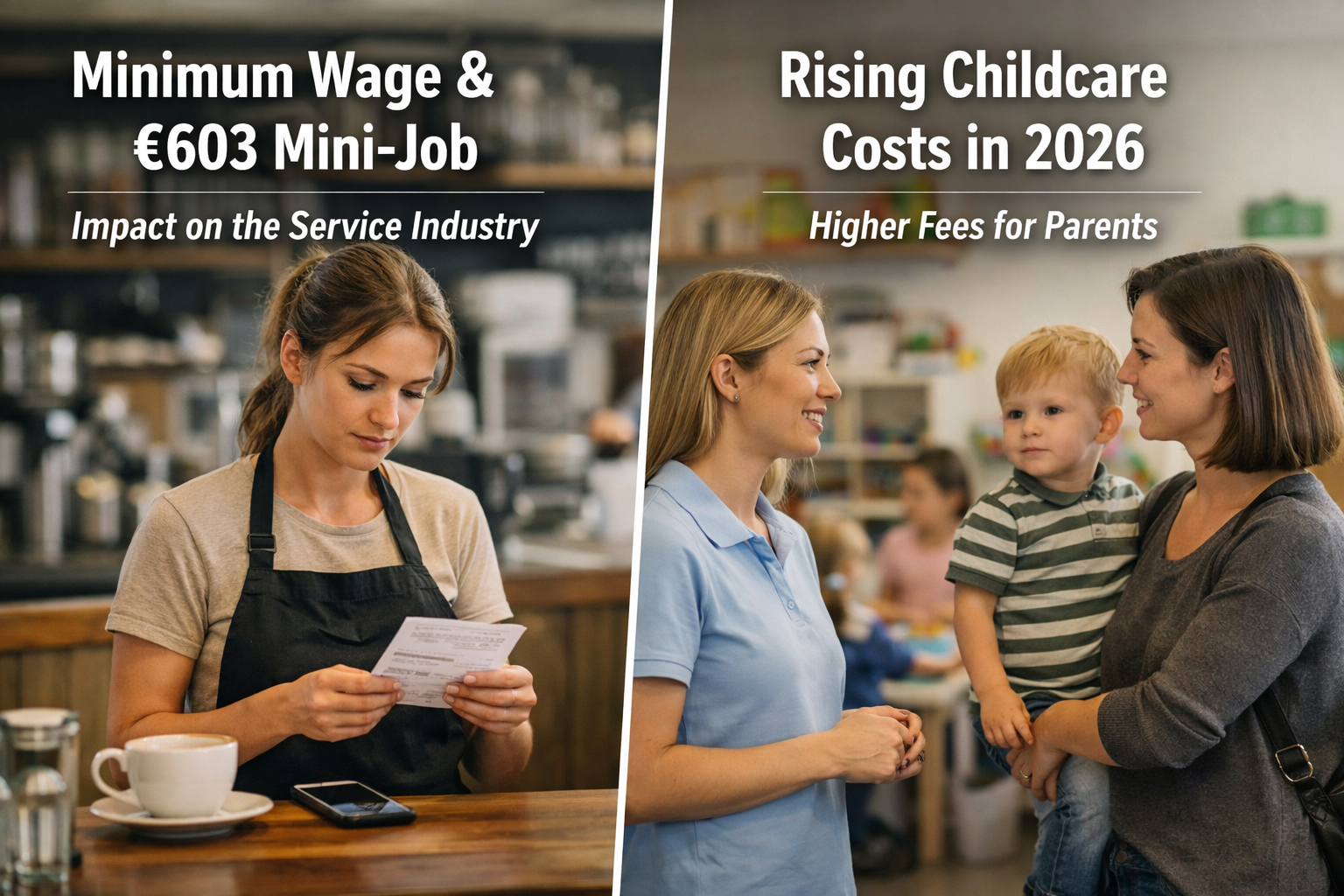
Germany’s labor market is undergoing a major structural shift in 2026. Driven by inflation and a shortage of workers, the statutory minimum wage (Mindestlohn) has reached a new high. For expat families, this isn’t just a headline; it directly impacts the cost of your babysitters, cleaning services, and even your local Kita’s auxiliary staff.
The 2026 Minimum Wage Hike
As of January 1, 2026, the national minimum wage has increased to €13.90 per hour. This represents a significant jump from the previous years and is scheduled to rise again to €14.60 in 2027.
While this is great news for workers, for employers (including private households), it means higher costs for:
- Household cleaning services.
- Private childcare and Nannies.
- Service staff at restaurants and cafes.
The New Mini-Job Limit: €603
In Germany, Mini-jobs (marginal employment) are a popular way for students, retirees, and stay-at-home parents to earn tax-free income. The Mini-job limit is legally tied to the minimum wage.
- 2026 Mini-Job Limit: €603 per month.
- Monthly Hours: At €13.90/hour, a Mini-jobber can work approximately 43 hours per month.
If a worker earns even €1 over this limit, the job becomes a “Midi-job,” and social security contributions kick in for both the employer and the employee.
Impact on Childcare and Household Help
If you employ a “Putzkraft” (cleaner) or a babysitter on a Mini-job basis, you must ensure you are compliant with the 2026 rates.
- Direct Costs: If your cleaner works 10 hours a month, you must pay at least €139.00.
- Minijob-Zentrale: You must register household help through the Minijob-Zentrale to benefit from the lower flat-rate social contributions and accident insurance.
The “Service Inflation” in 2026
Expats will notice that the 2026 wage hike has filtered through to the service industry. Kita auxiliary costs and private school “after-care” fees have seen a 5–8% increase as institutions adjust to the higher wage floor.
Furthermore, the “Aktivrente” initiative launched in 2026 now allows pensioners to earn up to €2,000 tax-free. This has brought many retirees back into the Mini-job market, potentially easing the shortage of babysitters and light household help.
Summary for 2026
The €13.90 minimum wage is the new floor for the German economy. Whether you are an employee looking for a side-hustle or a family managing household help, the €603 Mini-job limit is the number you need to remember. Stay compliant to avoid heavy fines from the Zoll (Customs), who are stepping up inspections in 2026.